Medicine Pill Bottle Watercolor: A Designer’s Review
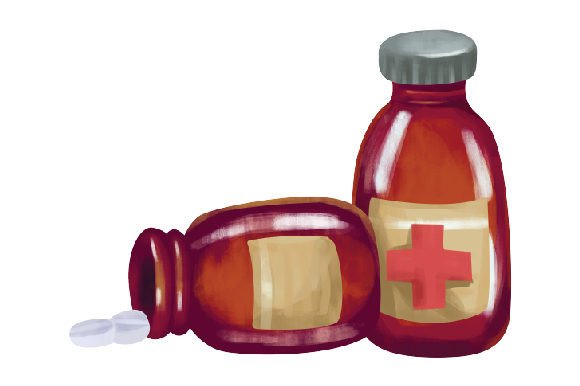
When I first opened the Medicine Pill Bottle Watercolor file, I felt a gentle, almost nostalgic pull. The soft, bleeding edges of the pill bottle, the subtle splatter of pigment around the label, and the muted color transition—it’s a design that quietly says care rather than screaming medical. It immediately reminded me of a hand-painted watercolor sketch, the kind a pharmacy might use on a boutique greeting card, not a sterile hospital sign. For an embroidery designer, this mood is a gift. It takes a functional object—a pill bottle—and turns it into something warm, personal, and highly giftable.
I’ve been stitching for over a decade, and I know that not every pretty digital file becomes a stitch-friendly masterpiece. The Medicine Pill Bottle Watercolor design sits in that sweet spot between artistic charm and practical embroidery potential. In this review, I’ll walk you through how it performs on real fabric, which products it elevates, where the watercolor effect needs extra care, and what you should know before you turn it into a finished product for a customer or a gift.
Why the Watercolor Style Stands Out in Medical Crafts
Most medical-themed embroidery designs go one of two ways: ultra-realistic line art or overly clinical icons. The Medicine Pill Bottle Watercolor breaks that pattern. The brush-like strokes, uneven opacity, and organic drips give it a handmade, almost painterly soul. This softness makes it perfect for projects where you want to show warmth—a nurse’s appreciation tote, a get-well-soon pillow, a baby onesie for a preemie’s homecoming, or a custom apron for a pharmacy tech who loves art.
The design’s personality is gentle, not grim. The pill bottle shape is recognizable, but the watercolor treatment turns it into a decorative motif that can live comfortably on a kitchen towel, a canvas zip pouch, or a boutique sweatshirt. It appeals to a customer who wants something unique, not a mass-produced medical symbol. As a designer, I’m always looking for motifs that tell a story without words, and this one delivers.
Translating the Watercolor Look into Stitches
Here’s the practical truth: digital watercolor effects are made of gradients, transparency, and scattered dots. Embroidery machines don’t do gradients natively. To get the watercolor feel, a digitizer must interpret those soft edges into a mix of fill stitches, running stitches, and carefully placed gaps. The Medicine Pill Bottle Watercolor file is provided as an SVG, PNG, EPS, and DXF—not as a ready-to-stitch embroidery file. That means you’ll need to digitize it yourself or hire a pro. The good news is that the vector formats (SVG and EPS) make it easy to separate the splatters, bottle outline, and label details into clean shapes for digitizing.
When I imported the SVG into my digitizing software, I noticed the watercolor splatters were composed of dozens of small, irregular blobs. These can be digitized as a series of low-density fill areas or a single complex fill with internal cutouts. I chose to use a soft satin border for the bottle and a light fill stitch for the label, with a few scattered running stitches for the drips. The result was a design that felt airy and artistic, not stiff. You’ll want to keep the overall stitch count moderate—too dense, and the watercolor lightness disappears. Test on a similar fabric first, and always review the stitch-out in good lighting to see if the thread colors mimic the watercolor wash.
Real-Life Test: A Custom Tote Bag for a Pharmacist
I decided to put the Medicine Pill Bottle Watercolor on a structured cotton tote bag for a client who wanted a thank-you gift for her sister, a long-time pharmacist. I used a 5x7 hoop, which comfortably held the design at about 4 inches wide. The light blue and slate gray threads I chose echoed the original watercolor’s cool tones. I added a thin, soft-pink wash for the label area, and digitized a few loose splatters outside the main bottle to mimic the original splash effect.
The stitch-out was clean. The bottle outline, even with its slightly irregular watercolor edge, stitched with personality. The small lettering on the label (if your version includes it) was a challenge—I enlarged the text slightly in the SVG before digitizing because anything below 5mm in height can become a blob on textured fabric. The tote looked boutique-quality, and the recipient thought it was hand-painted until I pointed out the stitches. That’s the power of a well-digitized watercolor design: it tricks the eye in the best way.
Products That Let This Design Shine
Based on my test, the Medicine Pill Bottle Watercolor works beautifully on mid-weight, stable fabrics. Here’s where I’d confidently use it:
- Cotton tote bags – the go-to for giftability and Etsy listings.
- Canvas zip pouches – for holding actual medicine or cosmetics.
- Linen tea towels – the natural texture adds to the watercolor charm.
- Pillow covers – a subtle, comforting accent for a reading nook or recovery room.
- Aprons – especially for a home baker or a pharmacy-themed kitchen shower.
- Baby bodysuits – use a soft cutaway stabilizer and keep the design small, around 3 inches, for a delicate look.
- Unisex sweatshirts – on the front chest or a small sleeve detail, it adds a creative touch without being loud.
On all these items, the watercolor effect feels intentional and artistic, not messy. The key is to match the thread colors to a light, pastel palette or a moody, muted tone, depending on the final product vibe. For a rustic craft fair item, try earthy threads; for a modern Etsy shop, go with airy mint and dove gray.
When to Stitch with Extra Caution
No design is perfect for every surface. The Medicine Pill Bottle Watercolor has a few scenarios where I’d advise slowing down and testing thoroughly:
- Small hoop sizes. The watercolor splatters and tiny label details can lose definition if scaled below 3 inches. The bottle shape might become a vague blob if the splatters merge. Always view the design in your embroidery software at the intended stitch size before committing.
- Stretchy fabrics. The irregular edges of watercolor splatters can pucker on jersey or spandex if you’re not using a heavy cutaway stabilizer or a fusible mesh. The design’s open areas might also let the fabric show through, which is fine on white but can muddy the look on dark knits.
- Dark backgrounds. The watercolor style often relies on a white or light base to look airy. On a black hoodie, the splatters might need a solid underlay, which can kill the delicate transparency. I’d stick to light or natural fabric colors unless you’re willing to digitize a white base layer and risk a slightly heavier stitch.
- Curved surfaces like caps. The pill bottle’s straight lines can warp on a curved cap brim. If you must use it on a hat, consider a flatter placement, like a side panel, and use a narrow hoop.
- Frequent washing. The scattered running stitches used for watercolor drips can be more prone to snagging than a solid satin stitch. Secure them well, and consider a lightweight iron-on backing to protect the stitches on items that will be washed often.
What You Actually Receive
The product description for Medicine Pill Bottle Watercolor states you’ll get the design in SVG, transparent PNG, EPS, and DXF formats. That’s a versatile bundle for a craft business owner. The SVG and EPS are your best friends for digitizing because they let you scale without losing quality and isolate individual elements. The transparent PNG is a huge time-saver for creating product mockups—just drop it onto a photo of a blank tote or pillow, and you have a realistic preview for Etsy listings or client approval. The DXF can be useful if you also work with cutting machines, though that’s outside embroidery.
What you won’t get is an embroidery file such as PES, DST, or EXP. That’s not a flaw—it’s just the nature of the product. You’re buying a design asset, not a ready-to-stitch file. Before you digitize, confirm the licensing. Many digital watercolor designs come with a standard commercial use license, but always check if you can sell finished items with the design, especially if you plan to list them on Etsy or at craft fairs. I’d also recommend reaching out to the designer if you’re unsure about the allowed number of sales or any restrictions on modifying the colors.
Stitching It Into a Business
For an Etsy seller or a small batch maker, the Medicine Pill Bottle Watercolor can fill a niche that’s surprisingly underserved. There are plenty of medical symbol items, but few that feel like a piece of art. Pair it with a short phrase like “one day at a time” or “relief” in a light script, and you have a product that speaks to people managing chronic conditions, recovery, or simply the love of pharmacy humor. The watercolor style also makes it a beautiful option for a thank-you gift for a doctor, nurse, or vet.
I can see this design living on a set of handmade linen sachets, a cozy reading pillow in a hospital volunteer’s office, or a small patch sewn onto a lab coat. The design’s gentle personality helps build trust with buyers who want something thoughtful, not generic. Use the transparent PNG to create a listing photo that shows the design on a soft, rumpled fabric background, and you’ll communicate the handmade, heartfelt quality before anyone sees the stitches.
Final Observations from the Stitch-Out
After testing the Medicine Pill Bottle Watercolor on a tote and a tea towel, and mocking it up on a sweatshirt and a baby onesie, I’m left with a clear sense of its strengths. It’s a design that invites you to slow down, choose thread colors carefully, and think about the project’s emotional tone. It won’t be the fastest stitch-out if you preserve all the watercolor details, but the result is a piece that looks custom and considered.
If you’re a maker who sells at craft markets, the watercolor pill bottle can become a signature motif. If you’re a hobbyist, it’s a design that makes a gift feel deeply personal. And if you’re a digital product seller, the SVG and PNG files give you everything you need to create commercial embroidery patterns (with proper digitizing) or instant-download printable art. Just remember to test, test, test—especially on the fabric your customer will actually use. The gentle watercolor magic is worth the extra care.