Apple Picking Crew: A Retro Embroidery Design Review
When a design file lands on my desk with the words retro, wavy, groovy in its description, I immediately picture how it will feel once it’s translated into thread. Apple Picking Crew isn’t an embroidery file in the traditional sense—it’s a digital graphic download, a set of vector artwork that you can use for screen printing, sublimation, or, as I’m doing here, evaluate for its potential as a machine embroidery design. The pack includes EPS and SVG files, which means clean, scalable lines that a digitizer can work with easily. But will it hold up when you turn it into a stitched piece? That’s the real question I set out to answer.
First Look at the Groovy Apple Picking Personality
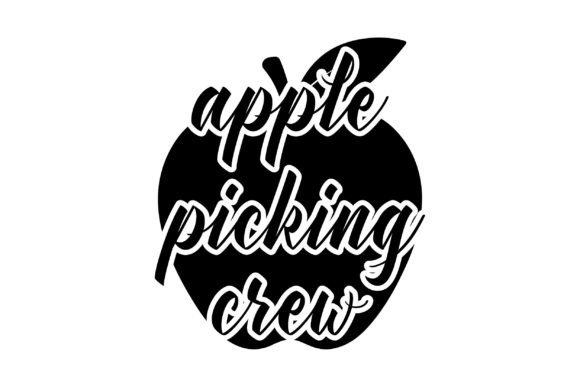
The moment I opened the design, I felt a wave of nostalgia. The lettering has that unmistakable wavy, hand-drawn flow—almost like lettering from a 1970s album cover. The word “Apple” stretches out with a playful bounce, while “Picking Crew” sits beneath it in a more stable, but still slightly curved, arrangement. It’s not a stiff, corporate font; it’s organic and full of movement. That alone tells me it would work beautifully on something like a custom embroidered tote bag for a fall market, or a cozy sweatshirt for a family apple-picking tradition. The mood is warm, community-oriented, and just a little bit funky. I could see customers smiling when they see it stitched on a kitchen towel or a baby romper.
The design doesn’t include a complex illustration—no apple trees, no baskets, no leaves. Instead, it relies entirely on the typography and the subtle wave to carry the message. That’s a smart choice for an embroidery digitizer, because it keeps the stitch count manageable and avoids the pitfalls of overly dense, tiny details that can turn into a crunchy mess on fabric. The simplicity is its strength. It’s a graphic that feels like a T-Shirt Design from a vintage boutique, but with the right digitizing, it can easily become a machine embroidery design that elevates a handmade product.
How the Wavy Lettering Translates to Stitches
As a digitizer, I immediately start thinking about satin stitch versus fill stitch. The text in Apple Picking Crew is thick enough that a combination of both would work well. The main wavy headline could be digitized with a satin stitch for a smooth, shiny finish, but if the design is scaled down, I might switch to a fill stitch to avoid thread breaks. The secondary text is smaller, so a medium-sized satin stitch would give it crisp definition. The key is to maintain the retro groove without letting the stitches become too dense or too loose. I’d test the stitch density on a scrap piece of cotton first, adjusting the underlay to keep the fabric from puckering.
One thing I love about vector-based files like EPS and SVG is that I can resize them without losing quality. That means I can scale Apple Picking Crew to fit a 4x4 hoop for a small embroidered patch or blow it up to a 5x7 or even 6x10 hoop for a back-of-jacket statement piece. The wavy lines don’t have any sharp corners or extreme details, so they’ll digitize smoothly even at a smaller size. However, I would caution against going too tiny. If you try to cram this into a 2x2 inch space, the lettering will lose legibility, and the satin stitches might crowd each other. It’s a design that thrives when given room to breathe.
The Real-Project Test: A Custom Tote Bag for the Orchard
I decided to mentally walk through a real-life scenario: a client wants a batch of personalized tote bags for a family apple-picking trip. They’d carry the tote to the orchard, fill it with fruit, and then use it as a reusable grocery bag all season long. That means frequent washing, rough handling, and a fabric that’s likely a sturdy canvas or cotton twill. Apple Picking Crew would be a perfect fit for that project. The retro vibe matches the activity, and the straightforward typography means the embroidery will stay readable even after dozens of washes.
On a canvas tote, I’d use a medium-weight cutaway stabilizer to support the stitches, especially since the fabric has a coarse texture. The design’s relatively open layout means I wouldn’t need to worry about the stitch density causing the fabric to ripple. I’d choose thread colors that contrast well: a deep burgundy or golden yellow on a natural canvas tote would pop beautifully. For a darker fabric, like a navy blue sweatshirt, I’d go with a lighter thread—maybe a cream or soft orange—to keep the groovy lettering visible. This is where the simple, graphic nature of Apple Picking Crew really shines; it’s not dependent on intricate shading, so it adapts to different color palettes easily.
When the Design Might Need Extra Care
No design is perfect for every surface, and Apple Picking Crew has a few limitations worth noting. The wavy baseline of the text means that if you use it on a highly curved garment—like a cap with a steep front panel—the lettering might appear to tilt or warp further. It’s not a dealbreaker, but you’ll want to test the placement on a curved surface and possibly adjust the digitizing to compensate for the distortion. I’d also avoid using this on very stretchy, thin fabrics like a ribbed baby onesie without adding a strong stabilizer, because the satin stitches could pull and cause the text to look distorted.
For small hoop sizes, I’d recommend scaling the design down carefully and running a test stitch on a similar fabric. The wavy letters might lose some of their playful character if they’re too small, and the spaces between letters could fill in with thread. I’d also advise against using this design on heavily textured fabrics like terry cloth or fleece, because the loops of the fabric can swallow the finer satin stitches, making the text look blurred. A topper, like a water-soluble stabilizer, can help, but it’s still a bit of a gamble.
From a Craft Business Perspective
As someone who runs a small embroidery shop, I immediately think about how a design will perform in an Etsy seller lineup or a craft fair booth. Apple Picking Crew has a strong seasonal appeal—it’s perfect for fall, Thanksgiving, and even back-to-school teacher gifts. You could stitch it onto a kitchen towel, add a simple apple motif, and sell it as a set. Or you could put it on a baby bodysuit for a cute “apple picking crew” photo outfit. The design’s simplicity makes it highly versatile. It doesn’t scream a specific year or trend, so it won’t feel dated quickly. That’s a huge plus for commercial embroidery projects.
However, this is a digital download—not an embroidery file. It comes as EPS and SVG, which means you’ll need to bring it into digitizing software or hire a digitizer to convert it into a stitch file. Before you do that, check the licensing terms that came with the purchase. Some graphic designers allow you to use their artwork on finished products for sale, while others restrict commercial use. You don’t want to invest time in digitizing only to find out you can’t sell the embroidered items. Always read the fine print. If the license is clear, you can confidently add this design to your product lineup, create printable mockups for your shop, and even use it in digital product previews to show customers what the finished piece will look like.
How Apple Picking Crew Affects Customer Trust and Branding
When a customer sees a well-executed embroidery, they immediately associate it with quality. The retro, wavy style of Apple Picking Crew does something special: it feels both nostalgic and handmade. That’s a powerful combination for a small shop product. It signals that the item wasn’t mass-produced, but it also looks professional enough to be a gift. I’ve noticed that designs with a clear personality—like this one—tend to get more engagement on social media and in online listings. A photo of a crisp, white tote with this groovy lettering stitched in warm orange thread instantly tells a story. It invites the buyer to imagine a day at the orchard, a family tradition, a cozy fall morning. That emotional pull is what turns a casual browser into a repeat customer.
For branding consistency, the design’s clean lines and bold presence make it easy to incorporate into a larger collection. You could pair it with a matching apple graphic, a set of fall leaves, or even a “pumpkin patch” variation to create a cohesive seasonal line. The key is to let the stitching clarity speak for itself. Don’t overcrowd the design with extra elements; let the wavy text be the star. That restraint will keep your products looking intentional and high-end, even if you’re selling at a local market.
Practical Embroidery Designer Notes Before You Stitch
Before you commit to a full production run, here are a few things I always do when working with a new design like Apple Picking Crew:
- Test on scrap fabric first. Use the same fabric and stabilizer you’ll use for the final piece. This lets you see how the stitches settle into the material.
- Check thread color contrast. The wavy letters can look drastically different depending on thread color. Test a dark design on light fabric and vice versa.
- Review stitch density. If the design feels too stiff or too loose, adjust the digitizing before you start a batch.
- Inspect small details. Even though this design is simple, look at how the curves of the letters connect. A rough digitizing can ruin the groovy flow.
- Test in black and white. A monochrome preview can reveal balance issues that color might hide.
- Use proper stabilizer. For most projects, a medium-weight cutaway stabilizer will work, but adjust based on fabric stretch and texture.
- Confirm the license. Since this is a digital graphic download, not an embroidery file, verify that you have the right to use the design on products you sell. If the terms aren’t clear, contact the seller.
Apple Picking Crew is one of those designs that feels like it was made for a crisp autumn afternoon. It’s not trying to be overly complicated, and that’s exactly why it works so well for embroidery. The retro lettering has a friendly, unpretentious charm that adapts to projects ranging from a simple apron to a pillow cover for a nursery. When you digitize it with care, the result is a stitched piece that looks intentional, clean, and full of personality. Whether you’re a seasoned digitizer or a creative entrepreneur building your product line, this design is worth a spot in your fall collection. Just remember to treat it as a starting point—a beautiful graphic that needs a thoughtful digitizer to turn it into a lasting embroidery piece.